
Italian Easter Bread, often known as Pane di Pasqua, is a festive, slightly sweet yeast bread traditionally baked to celebrate spring and renewal. This version delivers the same celebratory look and soft texture people love, while offering clear guidance, helpful techniques, and practical baking tips so the result feels bakery-quality even for home bakers.
This bread sits somewhere between brioche and challah, with a tender crumb, gentle sweetness, and a beautiful braided shape that makes it perfect for Easter breakfast, brunch, or dessert. Served with coffee or tea, it feels special without being overly rich.
Below you’ll find a complete, carefully structured recipe article designed to help you succeed from the first proof to the final bake.
Italian Easter Bread Recipe Card
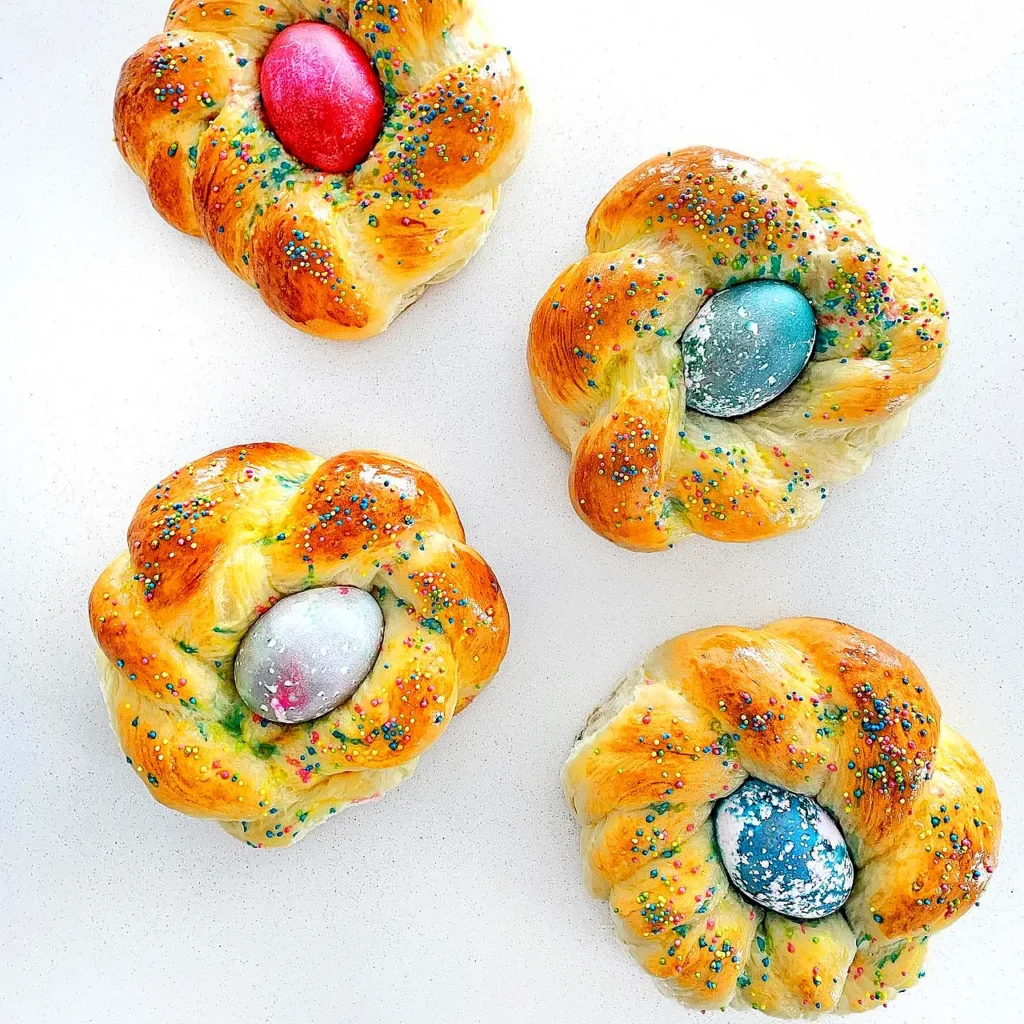
Recipe Name: Italian Easter Bread (Pane di Pasqua)
Cuisine: Italian
Category: Sweet Bread, Holiday Baking
Prep Time: 25 minutes
Rise Time: 2 to 2½ hours
Bake Time: 20–25 minutes
Total Time: About 3 hours
Yield: 6 small braided breads
Ingredients
- 2¼ teaspoons active dry yeast
- 1¼ cups lukewarm milk
- ⅓ cup unsalted butter, softened
- 2 large eggs
- 1 large egg (for egg wash)
- ½ cup granulated sugar
- 3½ cups all-purpose flour
- ½ teaspoon salt
- 6 dyed hard-boiled eggs
- Colorful sprinkles
Instructions
- In a stand mixer bowl fitted with a dough hook, combine yeast, warm milk, sugar, salt, butter, and two eggs.
- Add about half of the flour and mix on low speed until a thick batter forms.
- Gradually add the remaining flour, mixing until the dough pulls away from the sides of the bowl.
- Transfer the dough to a lightly floured surface and knead until smooth and elastic.
- Place the dough in a greased bowl, cover, and let rise until doubled in size.
- Divide the dough into 12 equal pieces and roll each into a rope about 14 inches long.
- Twist two ropes together, form a ring, and pinch the ends to seal.
- Arrange on a lined baking sheet, cover, and let rise again until puffy.
- Brush with egg wash, add sprinkles, and gently nestle one dyed egg into each ring.
- Bake at 350°F (175°C) until golden brown, then cool on a wire rack.
What Makes Italian Easter Bread Unique
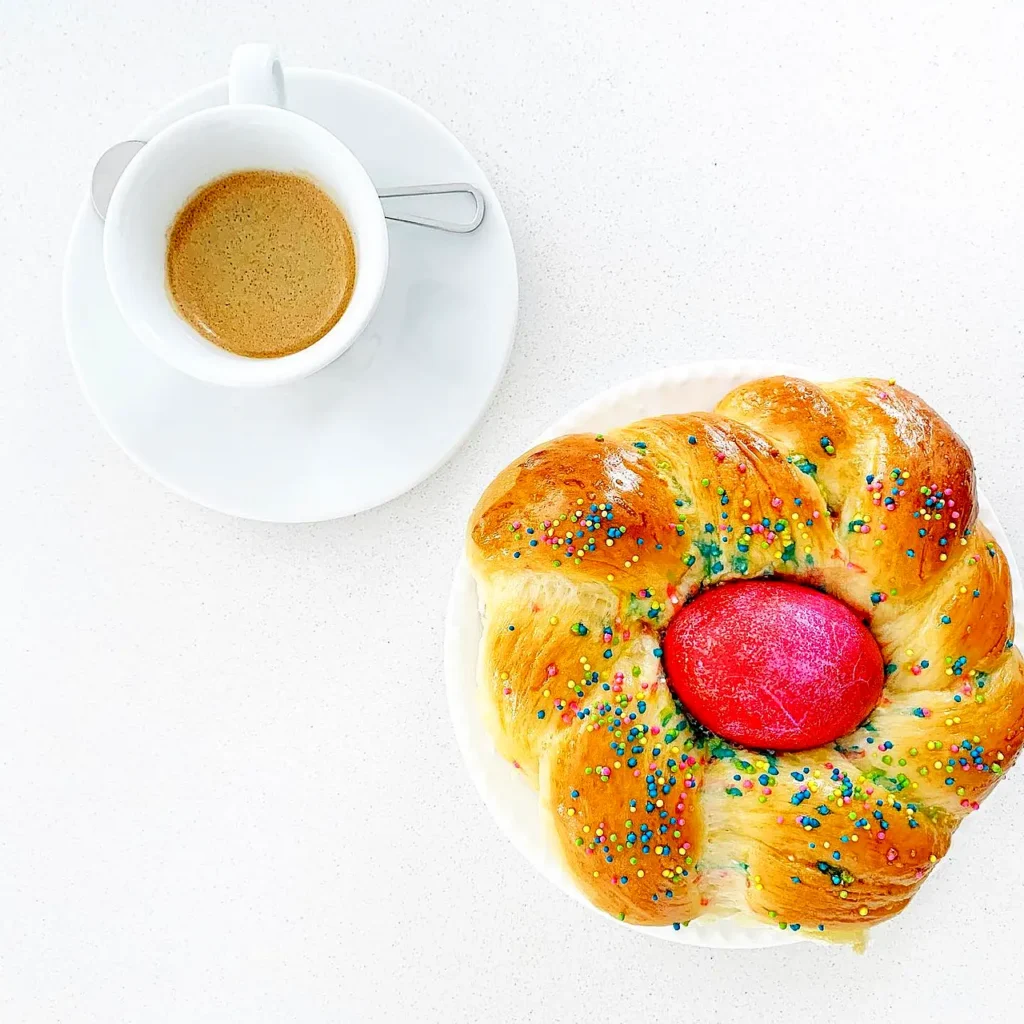
Italian Easter Bread stands out because it combines visual tradition with approachable flavor. The dough is enriched but not heavy, which makes it suitable for both breakfast and dessert.
Unlike cake-style Easter bakes, this bread relies on yeast rather than chemical leavening. That gives it structure, stretch, and a soft pull when torn.
The braided shape isn’t just decorative. It helps the bread bake evenly and creates texture on the crust while keeping the interior tender.
Understanding the Dough Texture
This dough should feel soft, slightly tacky, and elastic after kneading. It should not feel wet or stiff.
If the dough sticks heavily to your hands or surface, add flour one tablespoon at a time. If it feels dry or resists shaping, a teaspoon of milk can help restore balance.
A properly kneaded dough will spring back gently when pressed with a fingertip. That elasticity is what allows the bread to rise evenly during proofing.
Proofing Tips for Consistent Results
Proofing is one of the most important steps in this recipe. Yeast needs warmth, time, and moisture to work correctly.
Aim for a draft-free environment between 75°F and 80°F. An oven with the light on or a proof setting works well.
Under-proofed dough will feel dense after baking. Over-proofed dough may collapse or lose its defined braid.
For the second rise, the shaped breads should look noticeably puffed but still hold their structure. A gentle press should slowly bounce back.
Shaping the Classic Easter Rings
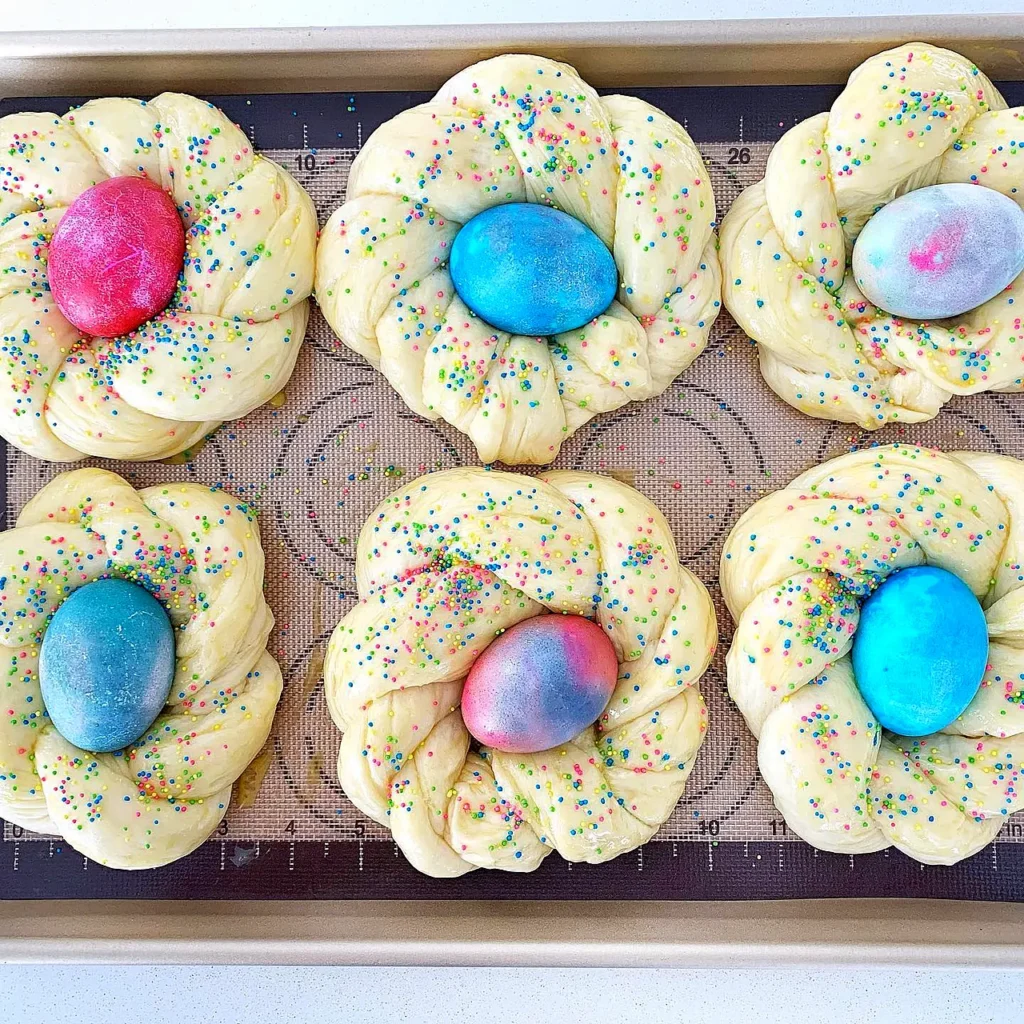
Dividing the dough evenly ensures all breads bake at the same rate. Using a kitchen scale helps maintain consistency.
When rolling the dough ropes, apply even pressure from the center outward. This prevents thin ends that can break during shaping.
Twisting two ropes together rather than braiding three keeps the structure secure and beginner-friendly. Sealing the ends firmly prevents unraveling in the oven.
The dyed egg should sit loosely in the center. The bread will expand around it as it bakes.
Baking for the Perfect Golden Finish
Egg wash plays a major role in appearance. It adds shine and enhances browning without affecting flavor.
Sprinkles should be added immediately after brushing so they adhere properly. Pressing them gently helps prevent scattering.
Bake on the center rack for even heat circulation. Rotate the pan halfway through if your oven has hot spots.
The bread is done when the tops are golden and the base sounds hollow when tapped lightly.
Storage and Make-Ahead Tips
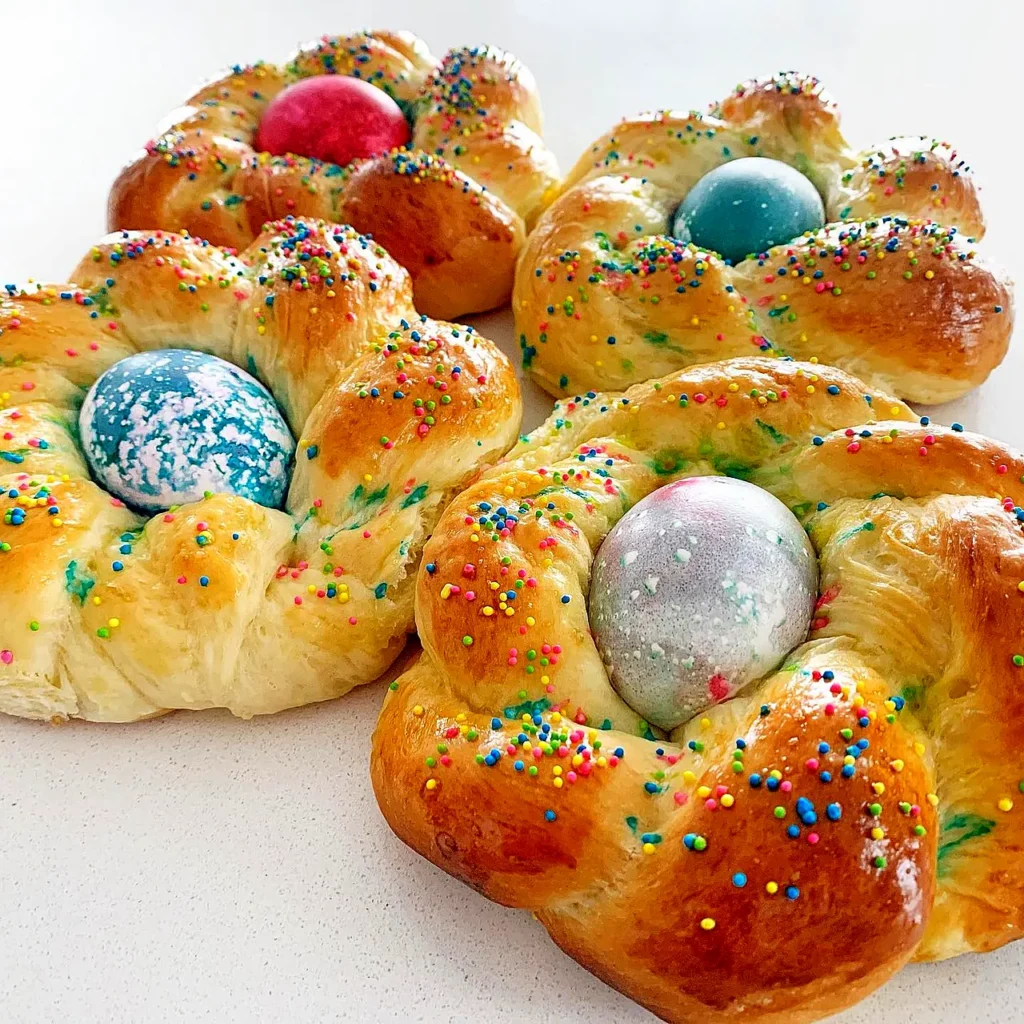
Italian Easter Bread is best enjoyed the day it’s baked. The texture is softest within the first 24 hours.
To store, wrap completely cooled bread in plastic wrap and keep at room temperature for up to two days. Refrigeration is not recommended as it dries the crumb.
For longer storage, freeze the bread without the eggs. Wrap tightly and freeze for up to one month, then thaw at room temperature.
Serving Suggestions
This bread pairs beautifully with coffee, tea, or warm milk. The mild sweetness complements both beverages.
For dessert, serve slices with fruit preserves, honey, or a light dusting of powdered sugar.
Leftover bread can be toasted and used for French toast or bread pudding, extending its usefulness beyond the holiday.
Frequently Asked Questions
Can I make this dough by hand without a mixer?
Yes, the dough can be mixed and kneaded by hand. Expect slightly longer kneading time to achieve elasticity.
Why is my bread dense after baking?
Dense bread is usually caused by under-proofing or too much flour. Allow the dough enough time to rise fully.
Do the eggs cook while baking?
The eggs are already hard-boiled before baking. They simply warm and set into the bread during baking.
Can I skip the sprinkles?
Yes, sprinkles are optional. The bread will still bake and taste the same without them.
How do I prevent the eggs from cracking?
Place the eggs gently into the dough without pressing down. Using room-temperature eggs also helps reduce cracking.
Can I make one large loaf instead of small rings?
You can shape the dough into one large braided ring. Increase baking time slightly and monitor for even browning.
This Italian Easter Bread recipe delivers both tradition and reliability. With clear steps, proper proofing, and careful shaping, it creates a centerpiece-worthy bake that’s as enjoyable to make as it is to serve.
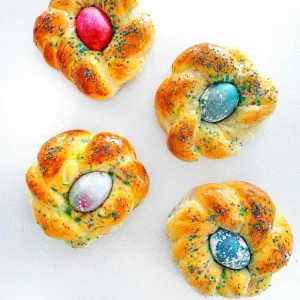
Italian Easter Bread (Pane di Pasqua) with Sprinkles and Dyed Eggs
Ingredients
For the Dough
- 2 1/4 tsp active dry yeast (1 packet)
- 1 1/4 cup milk lukewarm (not hot)
- 1/3 cup butter softened
- 2 large eggs
- 1/2 cup granulated sugar
- 3 1/2 cups all-purpose flour plus more as needed for kneading
- 1/4 tsp salt
For Topping & Decorating
- 6 large hard-boiled eggs dyed (boil before dyeing)
- 1 large egg for egg wash
- colorful sprinkles
Instructions
Prep the Eggs
- Hard-boil 6 eggs, cool completely, then dye them. Set aside to dry while you make the dough.
Make and Proof the Dough
- In a stand mixer bowl fitted with the dough hook, combine the yeast, lukewarm milk, softened butter, salt, sugar, and 2 eggs.
- Add about half of the flour and mix on medium-low until combined, scraping down the bowl as needed.
- Slowly add the remaining flour and mix until the dough comes together and begins forming a ball. If the dough looks overly wet, sprinkle in a little extra flour.
- Transfer the dough to a lightly floured surface and knead by hand for a few minutes until smooth and no longer sticky. Add a light dusting of flour only if needed.
- Form the dough into a ball and place in a greased bowl. Cover and let rise in a warm place until doubled, about 1 to 1 1/2 hours.
Shape, Decorate, and Bake
- Punch down the dough and divide it into 12 equal pieces.
- Roll each piece into a rope about 14 inches long.
- Twist 2 ropes together, pinch the ends, and form into a ring. Repeat to make 6 rings total.
- Place rings on a lined baking sheet. Cover and let rise again until doubled, about 1 hour.
- Preheat the oven to 350°F (175°C). Beat 1 egg for the egg wash.
- Brush each ring with egg wash, then add sprinkles on top. Gently place 1 dyed egg into the center of each ring.
- Bake for 20 to 25 minutes, or until golden. Cool on a rack before serving.
Notes
- If your dough feels too sticky, add flour 1 tablespoon at a time until it’s smooth and workable.
- Let the dyed eggs cool to room temperature before nesting them into the dough to reduce cracking.
- Proofing time depends on room temperature—look for the dough to double, not the clock.
- For the best texture, cool the breads on a rack so the bottoms don’t steam and soften.
Leave a Reply