
This peppercorn-crusted beef tenderloin is a simple, show-stopping roast built around the foolproof reverse-sear method.
Expect a tender, evenly cooked interior with a deeply caramelized, peppery exterior that makes it a perfect centerpiece for holiday or special-occasion dinners.
I wrote this version to be easy to follow, flavor-forward, and tuned for home cooks who want reliable results without fuss.
Below you’ll find ingredient notes, equipment tips, precise temperatures, timing guidance, and a creamy horseradish sauce that complements—not competes with—the beef.
Why choose beef tenderloin and the reverse-sear method
Beef tenderloin is the most tender steak cut—and when cooked carefully, it yields buttery, melt-in-your-mouth slices.
The reverse-sear approach roasts slowly at low temperature first, then finishes with a hot sear for a consistent doneness and an intense outer crust.
This method reduces gray bands, preserves juices, and gives you much more margin for error than high-heat roasting alone.
It’s especially useful when serving a crowd because you can roast ahead and sear just before slicing for best texture.
Ingredients (serves 4–6)
- 1 center-cut beef tenderloin, trimmed, about 2–3 lb.
- Kosher salt, for seasoning.
- 2 tbsp coarsely cracked black peppercorns.
- 8 tbsp unsalted butter (or clarified butter/ghee).
- 4 sprigs fresh thyme.
- 2 sprigs fresh rosemary.
- 3 garlic cloves, smashed.
- Flaky sea salt, to finish.
- ½ cup sour cream.
- ½ lemon, juiced.
- 2–3 tbsp prepared horseradish, adjust to taste.
- 2 tbsp fresh chives, finely chopped.
- ¼ tsp fine salt and a pinch black pepper for the sauce.
Important ingredient notes and respectful swaps
Use fresh herbs and whole peppercorns for the best aromatic profile.
Crushing peppercorns yourself keeps the crust assertive but not overpowering.
If your tenderloin has a silverskin trim it away and tie the roast evenly so it cooks uniformly.
A digital instant-read thermometer is the single most important tool for predictable results.
Trussing, seasoning, and dry-brining for a better crust
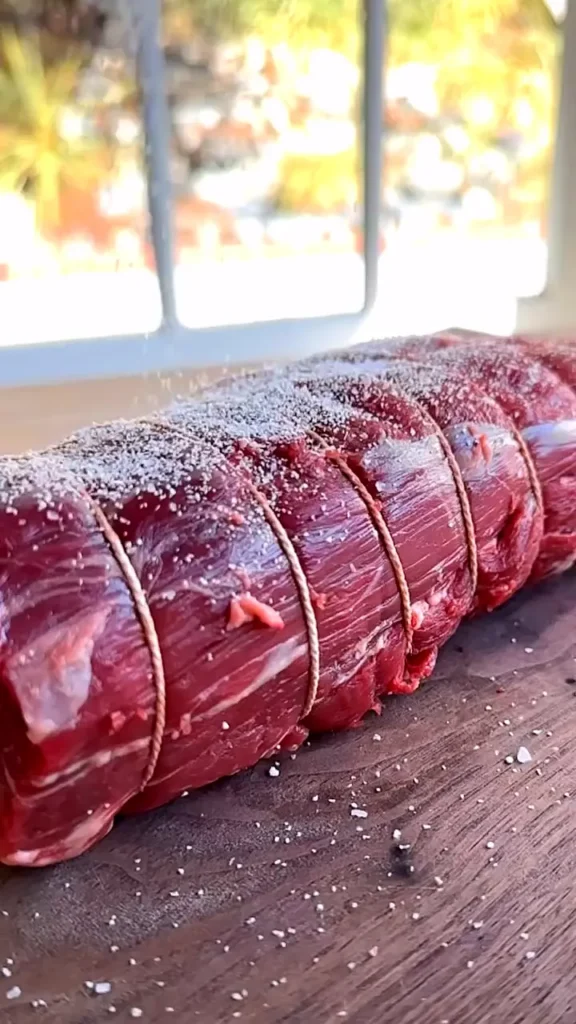
Trim and tie the tenderloin every inch so it’s a uniform cylinder; this makes carving cleaner and roasting even.
Season generously with kosher salt, then press coarsely cracked peppercorns onto all sides so they form a thick, even coating.
Refrigerate uncovered for at least one hour, ideally overnight, to dry the surface and let the salt penetrate.
This step builds flavor and gives you the dry exterior that crisps up during searing.
Low-and-slow roasting: temperatures, timing, and doneness targets
Preheat your oven to 225°F (107°C) for an even, gentle roast that develops flavor without overcooking.
Place the tenderloin on a wire rack set over a rimmed sheet and insert an instant-read thermometer into the thickest part.
Roast until the internal temperature reaches 120–125°F (49–52°C) for medium-rare, which usually takes about 2–3 hours for a 2–3 lb tenderloin.
Remove from the oven and rest 8–10 minutes while you prepare the pan for searing.
The sear and herb-butter baste — technique for a perfect crust
Heat a heavy skillet over high heat and add butter, thyme, rosemary, and smashed garlic.
Once the butter is foamy and aromatic, add the tenderloin and sear on all sides until deeply browned and the thermometer reads 130°F (54°C).
While searing, continuously spoon the hot herb butter over the roast to infuse flavor and encourage even browning.
Sear quickly—about 2–3 minutes total—so the interior remains medium-rare.
Resting, slicing, and plating suggestions
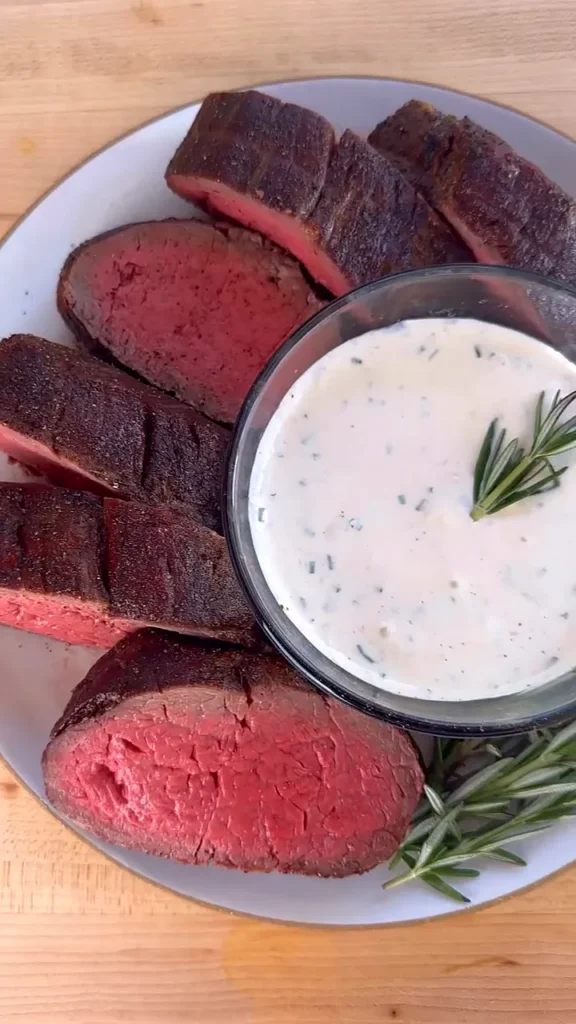
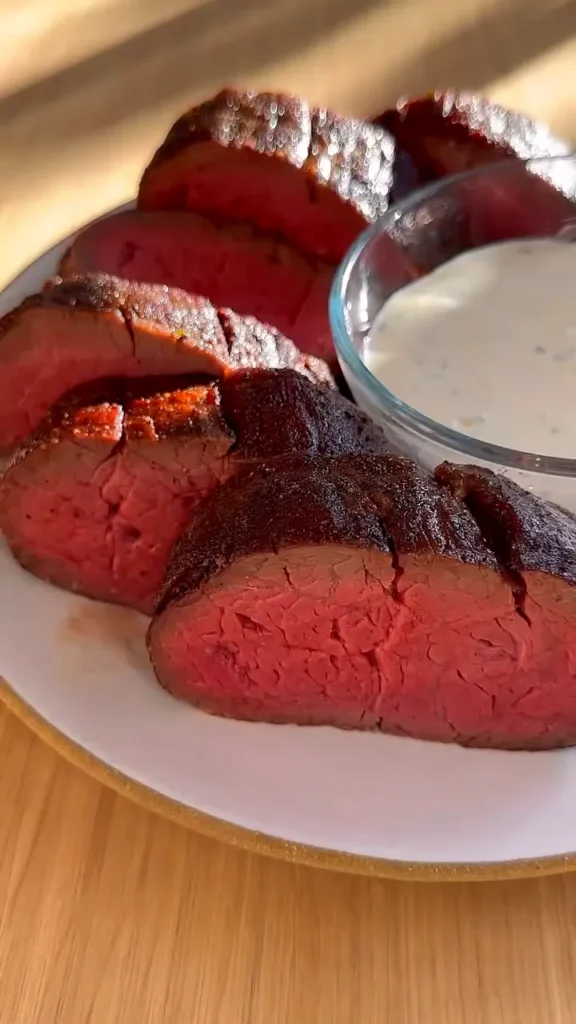
After searing, transfer the tenderloin to a cutting board and rest 15–20 minutes to let the juices redistribute.
Slice into ½–1 inch thick medallions against the grain for tender bites and tidy presentation.
Finish each slice with a sprinkle of flaky sea salt and chopped chives for texture and color.
Serve with the horseradish cream on the side so guests can choose the amount they prefer.
Horseradish cream — bright, balanced, and easy
In a small bowl, whisk ½ cup sour cream, lemon juice, 2–3 tbsp prepared horseradish, ¼ tsp salt, pinch of black pepper, and 2 tbsp chopped chives.
Taste and adjust the horseradish or salt as needed—this sauce should be tangy with a gentle horseradish kick that lifts the beef.
Make the sauce up to a day ahead and refrigerate; let it come to near room temperature before serving so flavors shine.
A small spoonful on each slice adds freshness and a warm-heat contrast to the buttery beef.
Timing plan for stress-free service
- Night before: Trim, salt, pepper, and refrigerate uncovered if possible.
- 2–3 hours before serving: Remove from fridge to come to room temperature.
- Roast low-and-slow until 120–125°F, rest briefly, then sear 2–3 minutes.
- Final rest 15–20 minutes, then slice and serve.
This sequence lets you stagger work and still present hot, freshly seared slices at the table.
Use warm plates and tent loosely with foil if you need to hold the roast for short intervals.
Simple sides and wine-friendly pairings
Roasted root vegetables, creamy mashed potatoes, or a winter green salad pair naturally with this tenderloin.
A full-bodied red like Cabernet Sauvignon or a plush Merlot complements the peppercorn crust and herb butter.
For a lighter accompaniment, try sautéed greens with garlic and lemon to cut through richness.
A bright, acidic side helps balance the meal and keeps the palate refreshed.
Frequently Asked Questions (FAQ)
Q: What internal temperature should I aim for if I prefer medium?
Aim for 135–140°F (57–60°C) after searing and resting for a medium finish.
Q: Can I use a broiler instead of searing in a pan?
Yes — high broiler heat can create a crust, but watch closely to avoid overcooking and rotate for even browning.
Q: How long can I refrigerate the horseradish cream?
The sauce keeps well for up to 3 days in an airtight container; stir before serving.
Q: Is reverse-sear safe for thicker or thinner roasts?
Reverse-sear works best on thicker pieces (2–3 inches) where the low roast raises internal temp slowly.
Thin cuts will cook through quickly and may not benefit as much from this method.
Q: Can I substitute pepper for a different crust?
Absolutely — a mixture of crushed coriander and mustard seeds makes a fragrant alternative to peppercorns.
Q: Do I need to tie the tenderloin?
Tying ensures uniform shape and even cooking, and it makes slicing neater; it’s recommended for presentation.
Q: What if my thermometer overshoots the target?
Resting will not significantly lower the internal temperature; if you overshoot, slice slightly thinner and serve with sauce to add moisture.
If you want, I can format this as a printable recipe card, generate a shopping checklist, or adapt the method for a grill or sous-vide setup.
Peppercorn Crusted Beef Tenderloin with Horseradish Cream Sauce
Description
Ingredients
For the Beef Tenderloin
- 1 piece beef tenderloin center-cut, 2–3 lb, trimmed
- kosher salt to taste
- 2 tablespoons black peppercorns coarsely cracked
- 8 tablespoons unsalted butter or ghee
- 4 sprigs fresh thyme
- 2 sprigs fresh rosemary
- 3 cloves garlic smashed
- flaky sea salt for finishing
For the Horseradish Cream Sauce
- 0.5 cup sour cream
- 0.5 lemon juice from ½ lemon
- 2–3 tablespoons prepared horseradish
- 2 tablespoons fresh chives finely chopped
- 0.25 teaspoon salt
- black pepper pinch
Instructions
Preparation
- Trim and tie the beef tenderloin evenly to ensure uniform cooking.
- Season generously with kosher salt and coat all sides with cracked black peppercorns.
- Refrigerate uncovered for at least 1 hour or up to overnight.
Slow Roasting
- Bring the tenderloin to room temperature, then roast at 225°F until it reaches 120–125°F internally.
Searing and Resting
- Sear the tenderloin in hot herb butter, basting continuously until browned and 130°F internally.
- Rest the beef for 15–20 minutes, then slice and finish with flaky sea salt.
Horseradish Cream Sauce
- Mix all sauce ingredients until smooth and adjust seasoning to taste.
Notes
- Use a digital thermometer for accurate doneness and best results.
- The horseradish sauce can be prepared up to 3 days in advance and refrigerated.
- Letting the beef rest fully before slicing ensures maximum juiciness.
Leave a Reply