
This recipe elevates a classic beef tenderloin into a composed, restaurant-style plate that’s approachable at home.
The combination of a well-seared, gently roasted tenderloin with a bright horseradish Dijon rosemary butter and two contrasting potato preparations balances richness, texture, and aromatic lift.
Why this combination works
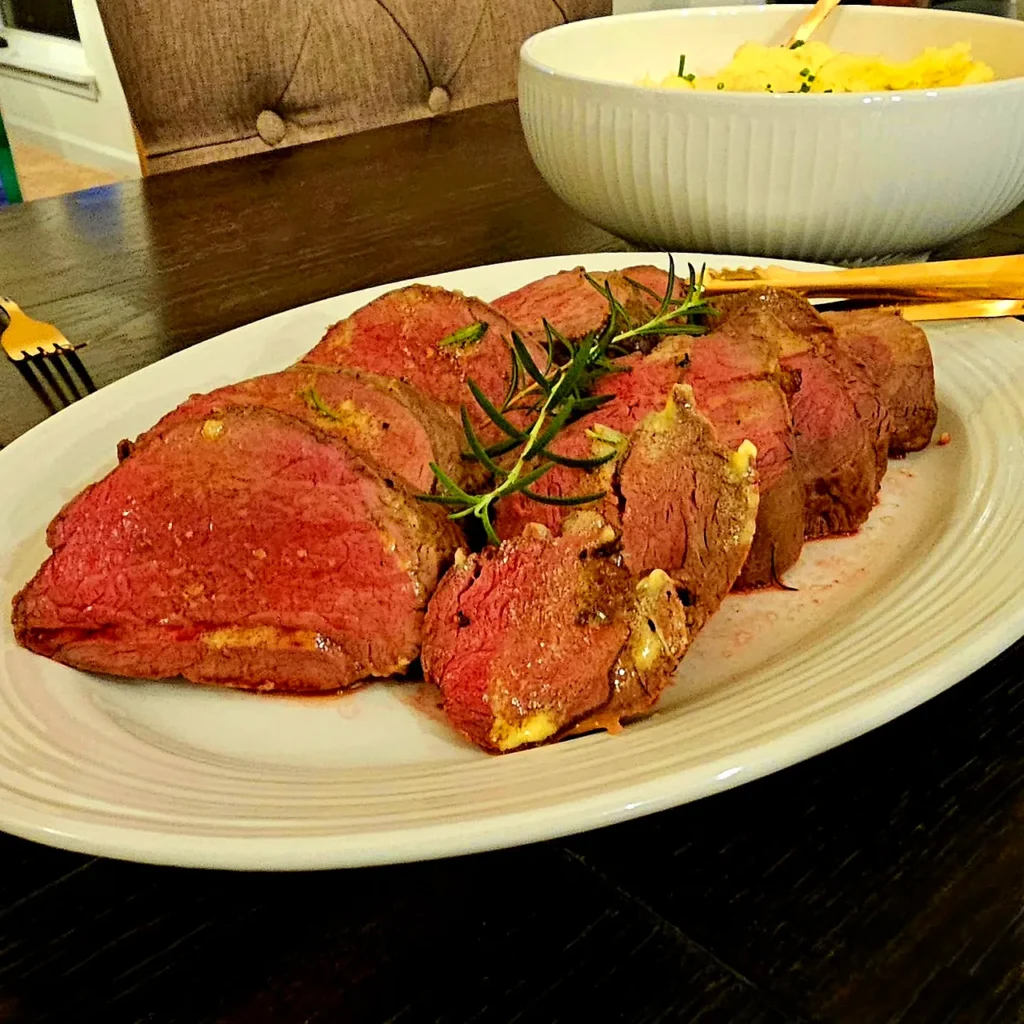
The beef tenderloin is prized for its tender texture and clean beef flavor which responds well to concentrated, aromatic finishing sauces. A compound butter with horseradish and Dijon cuts through the richness and adds palate-cleansing heat without masking the meat.
Pairing an ultra-creamy Chive Boursin mashed potato with crisp-edged fondant potatoes introduces both comfort and technique-driven contrast. This pairing gives a composed plate that looks refined while remaining comfortable and familiar.
Choosing and prepping the beef tenderloin
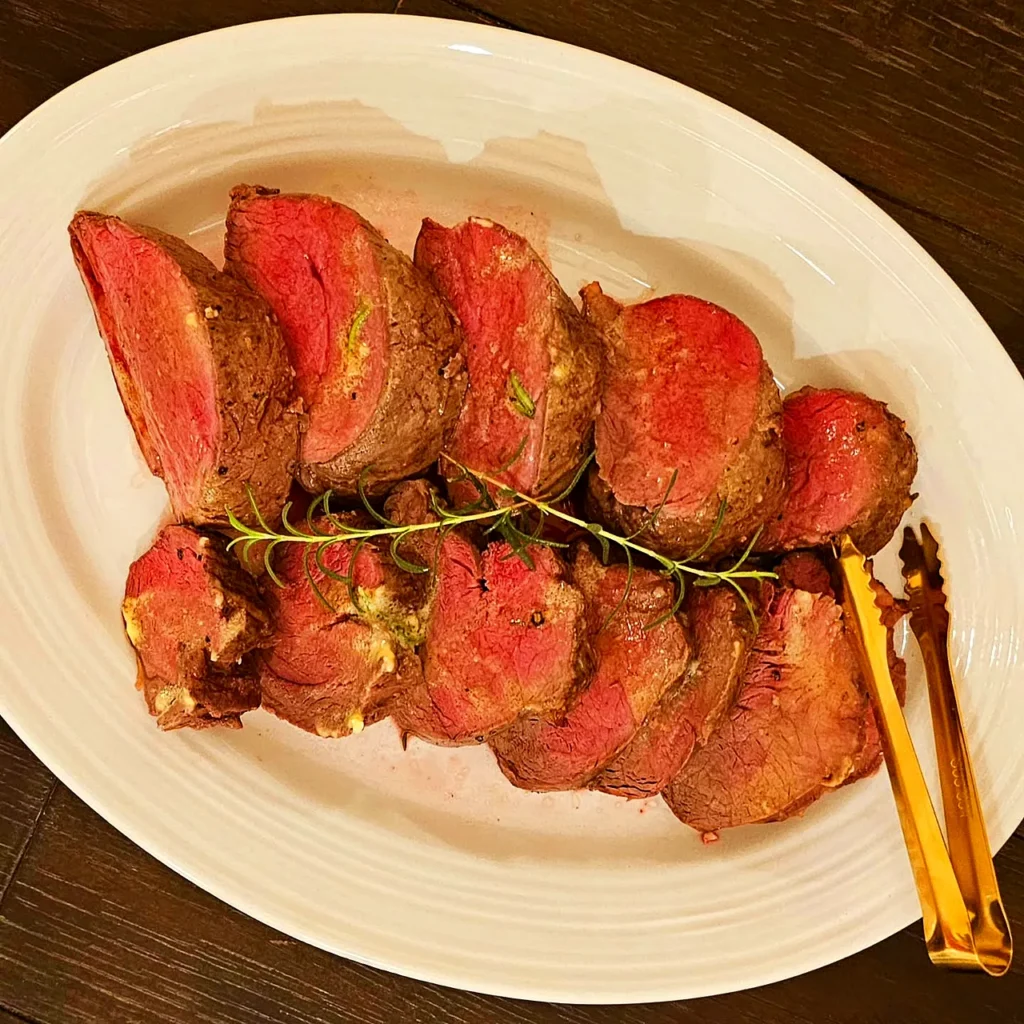
Select a center-cut whole tenderloin for even cooking and consistent slices when serving. If available, grass-fed beef offers a leaner profile and a clear beef flavor; trim only what’s necessary and leave a thin silver-skin removed for better crusting.
Tie the roast into even sections if it’s uneven to ensure uniform doneness during roasting. Season simply with kosher salt and freshly ground black pepper to let the beef’s natural flavor come through.
Sear in a heavy skillet over high heat until deeply browned on all sides, then finish in a hot oven with sprigs of rosemary. Rest the meat 10–15 minutes under loose foil so juices redistribute and the final slice remains juicy.
Horseradish Dijon Rosemary Butter — finishing touch
Soften unsalted butter to room temperature before mixing for a smooth emulsion. Fold in prepared horseradish, Dijon mustard, finely chopped rosemary, and minced shallot, then season lightly to taste.
Use this compound butter to finish warm slices of beef so it melts into the surface and releases the aromatics. Make a small batch ahead and chill; it holds for several days and can be portioned into rounds for easy plating.
Chive Boursin Mashed Potatoes — technique and texture
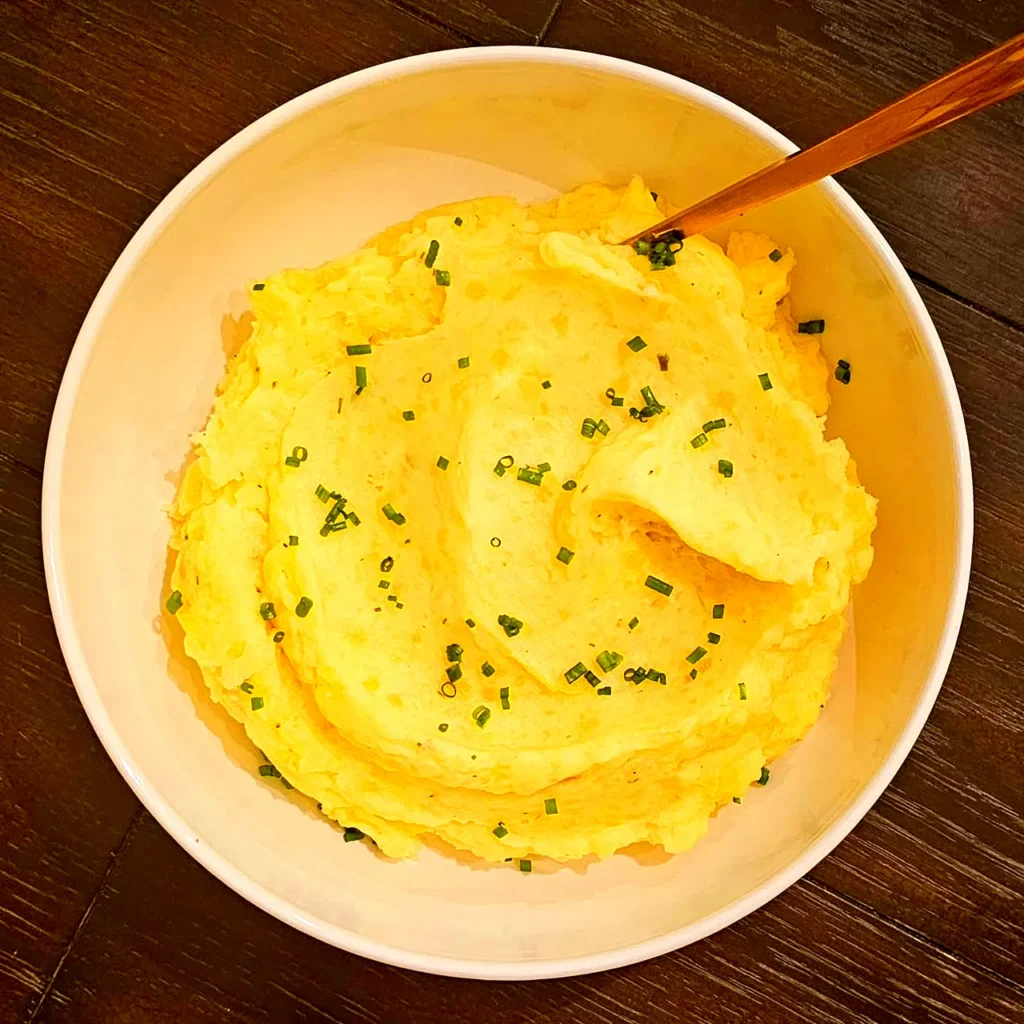
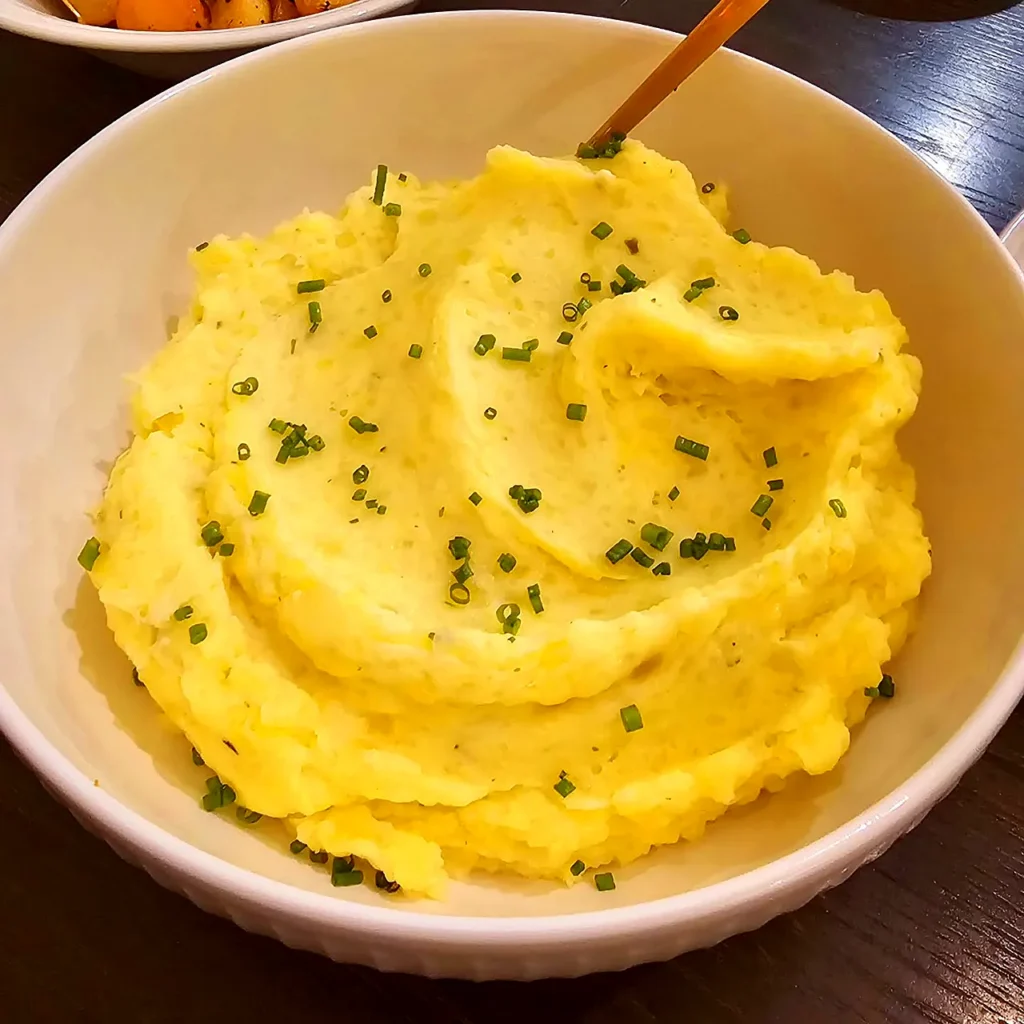
Choose Yukon Gold potatoes for a naturally buttery texture and less starch-driven glue than Russets. Boil in well-salted water until fully tender, drain thoroughly, and mash while still hot for a silky finish.
Incorporate Boursin garlic & herb and warm cream in small additions until you reach the desired richness. Fold in freshly chopped chives at the end for freshness and a mild oniony lift.
French Fondant Potatoes — crisp, glazed rounds
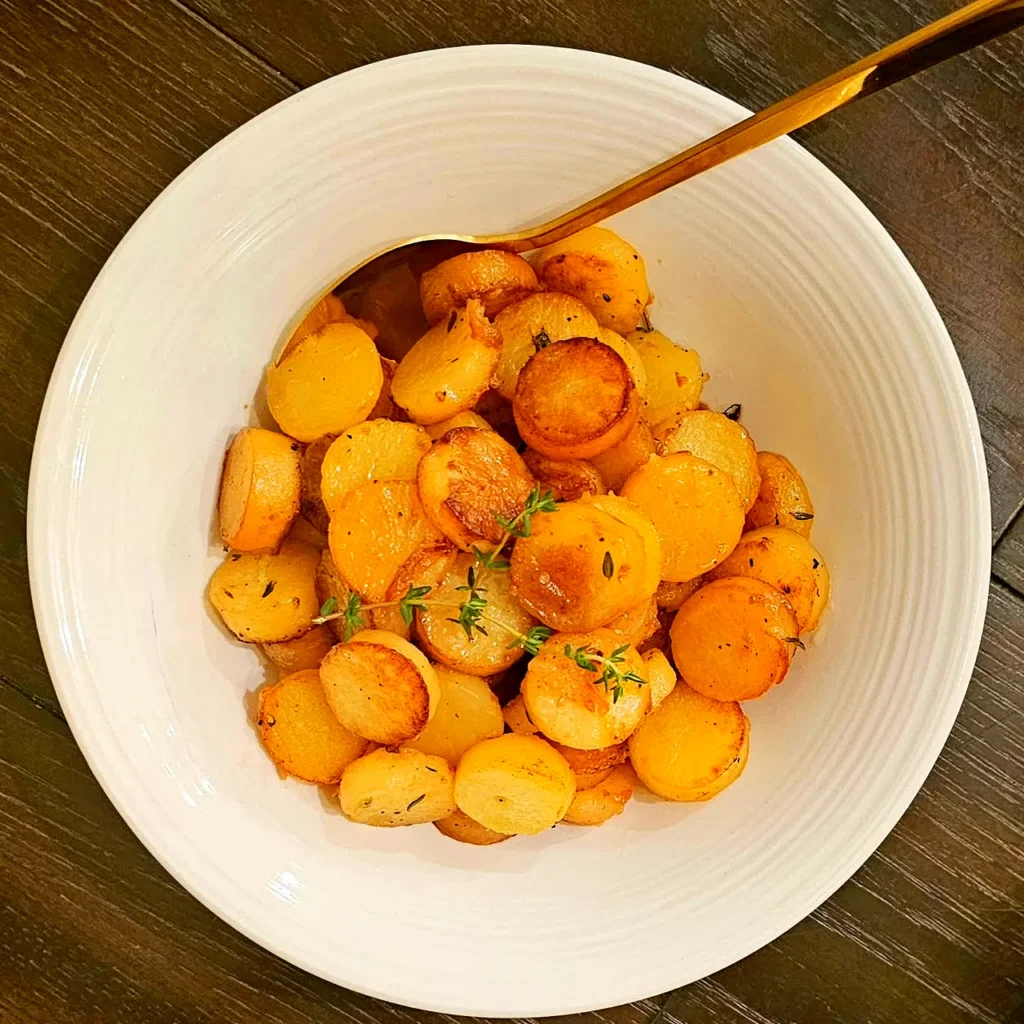
Cut Yukon Gold potatoes into uniform thick rounds and dry them completely before browning. Brown in a mix of butter and olive oil until each face is golden, then add smashed garlic and fresh herbs for aromatic base notes.
Pour stock to come halfway up the rounds, then transfer to a 400°F (200°C) oven and cook until tender and glazed, about 25–30 minutes. The result is a potato with a crisp, buttered exterior and a melting, buttery interior that contrasts the mashed potatoes.
Timing, workflow, and plating like a pro
Start potatoes first if serving both styles; the fondant needs oven time and the mashed are best held warm and finished last. Sear the tenderloin just before the fondant goes into the oven so the roast and potatoes finish around the same time.
Rest the beef while you finish the mashed potatoes and prepare the compound butter. Slice the tenderloin thickly against the grain, spoon the warm horseradish Dijon rosemary butter over each slice, and plate with both potato styles for a composed look.
Garnish with a few fresh sprigs of rosemary and a scattering of chives to echo flavors and add color contrast. Serve immediately to preserve textures and the warm melt of the butter.
Quick reference: internal temperatures
| Desired Doneness | Target Internal Temp (Carryover Resting Temp) |
|---|---|
| Rare | 125°F (52°C) |
| Medium-rare | 130–135°F (54–57°C) |
Equipment and mise en place checklist
- Heavy skillet (cast iron preferred) for searing and fondant browning.
- Ovenproof skillet for transferring to the oven without switching pans.
- Instant-read thermometer to take accurate internal temps.
- Potato ricer or masher for smooth mashed potatoes.
FAQ
Can I use a different cut of beef?
Yes, a center-cut striploin or ribeye roast will work but adjust timing as those cuts have more fat and a different texture. Use the same searing and resting principles for best results.
How far ahead can I make the horseradish butter?
Compound butter can be made up to 3 days ahead and kept refrigerated in a sealed container. Slice into discs and return to the refrigerator for quick finishing at service.
Is Boursin necessary for the mashed potatoes?
Boursin adds a herbed, creamy shortcut, but you can substitute with cream cheese plus minced garlic and herbs if unavailable. Adjust salt carefully since Boursin and cheeses vary in seasoning.
How to keep fondant potatoes from getting soggy?
Dry potatoes thoroughly before browning and ensure stock reaches only halfway up the rounds. A hot oven and appropriate sear prevent excess steaming and promote glazing.
What’s the best way to reheat leftovers without drying the beef?
Slice and warm gently in a low oven (250°F / 120°C) covered with foil, or steam briefly over low heat to preserve moisture. Avoid high heat which will overcook and toughen the slices.
Can this be scaled for a dinner party?
Yes; plan oven capacity and consider roasting two smaller tenderloins rather than one very large piece for more even results. Time potatoes in batches or use one style as a make-ahead to simplify service.
Any substitutions for dairy in the mashed potatoes?
Use a neutral plant-based cream and a dairy-free soft cheese for a similar texture. Taste and adjust seasoning since dairy-free products often have less natural salt and tang.
This assembly creates a composed plate with contrasting textures and a clear flavor arc from the beef’s umami to the sharpness of horseradish and the comfort of two potato preparations. Follow the temperature guide, keep mise en place tight, and the result will be a memorable, elevated dinner at home.
Roasted Beef Tenderloin with Horseradish Dijon Rosemary Butter and Two-Style Potatoes
Description
Ingredients
Beef Tenderloin
- 1 whole beef tenderloin about 2 to 2.5 pounds, trimmed
- 1.5 teaspoons kosher salt
- 1 teaspoon black pepper
Horseradish Dijon Rosemary Butter
- 4 tablespoons unsalted butter softened
- 1 tablespoon prepared horseradish
Chive Boursin Mashed Potatoes
- 2 pounds Yukon Gold potatoes peeled and cubed
French Fondant Potatoes
- 4 medium Yukon Gold potatoes peeled and cut into rounds
Instructions
Roast the Beef Tenderloin
- Season and sear the beef tenderloin, then roast in a hot oven until desired doneness.
- Rest the beef under foil before slicing.
Prepare the Butter and Potatoes
- Mix the horseradish Dijon rosemary butter and prepare both potato dishes as directed.
Notes
- Allow the beef to rest fully before slicing to retain juices.
- Fondant potatoes are best served immediately while the exterior is crisp.
Leave a Reply