
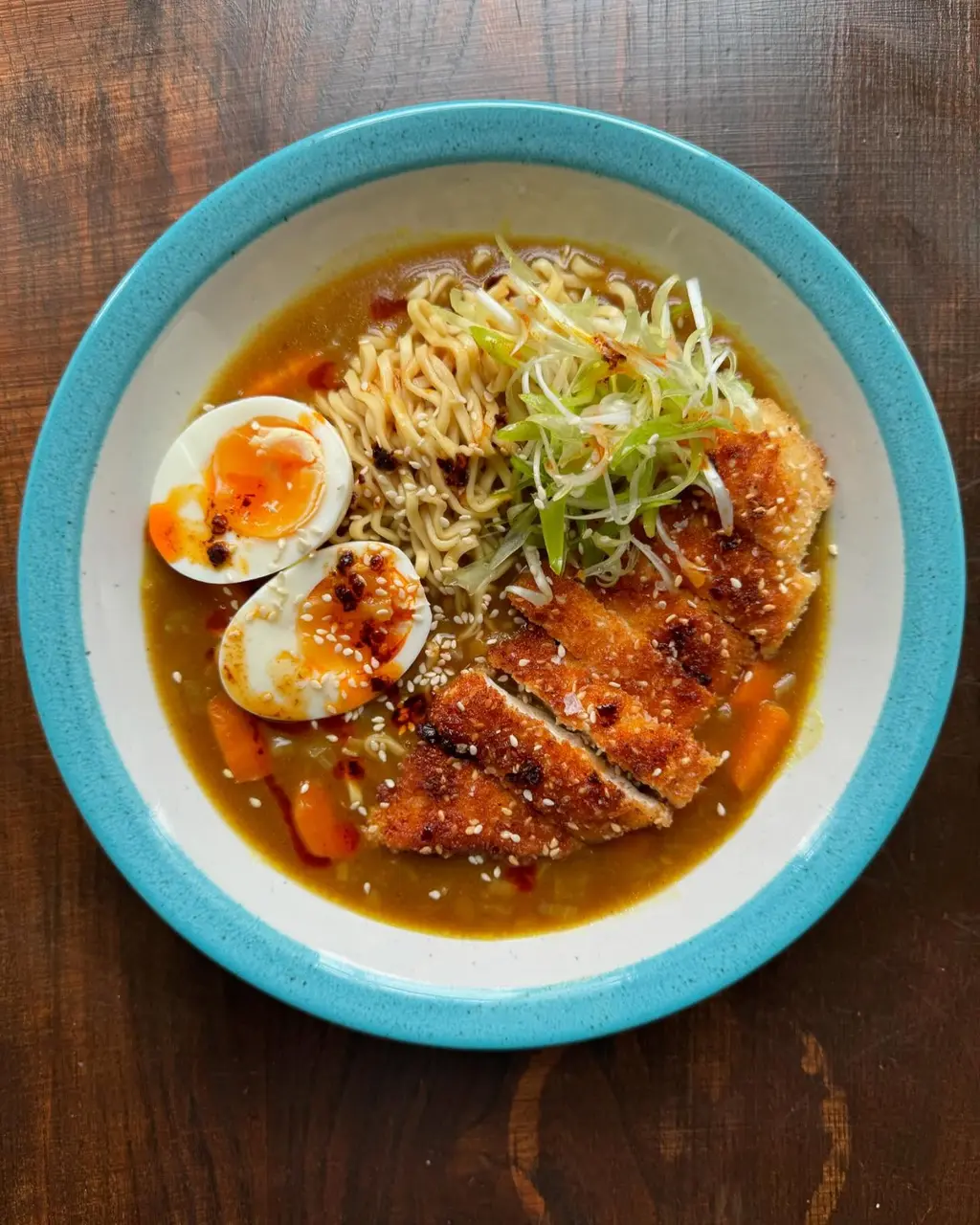
Some bowls just feel right on a cold day. This Chicken Katsu Curry Ramen is one of them — crisp chicken, soft noodles, and a curry broth that brings everything together in a way that feels cozy without trying too hard.
It is the kind of dinner that makes the kitchen smell warm and inviting while still staying practical enough for a real weeknight. If you enjoy easy comfort food with a little personality, this bowl fits right into that space.
Why this bowl works
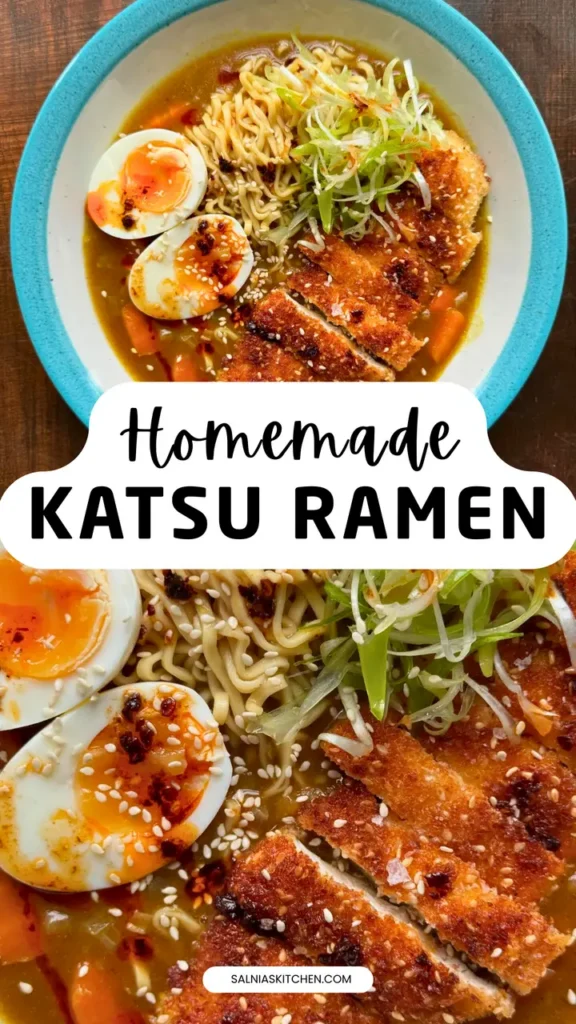
The best thing about this recipe is the contrast. You get crunchy panko-coated chicken, springy ramen noodles, and a thick curry broth that feels smooth and deeply savory in every spoonful.
The curry is what gives the bowl its gentle warmth, while the chicken keeps every bite interesting. It is comforting, but not boring, and that balance is exactly why it works so well.
What you’ll need (ingredients explained)
For two generous bowls, start with one large chicken breast, butterflied or halved so it cooks evenly and fries up with good coverage.
For the coating, you will need flour, a beaten egg, and panko breadcrumbs mixed with sesame seeds for extra crunch and a toasty finish.
The broth begins with onion and carrot, which add a quiet sweetness and give the curry a little body before the roux goes in.
Japanese curry roux blocks make the quickest version and give a familiar, mellow curry flavor. If you prefer to build it yourself, you can use curry powder and a simple roux for a lighter handmade version.
Soy sauce adds the savory edge at the end, and ramen noodles bring the whole bowl together. Fresh noodles are ideal, but dried noodles work well too as long as they stay springy.
For the finishing touch, soft-boiled eggs, spring onion, and a little chilli oil give the bowl more color, texture, and contrast.
The method — from broth to bowl
Start the broth by heating a little neutral oil in a saucepan, then cook the onion and carrot until they soften and smell sweet.
Add the water and curry roux, then stir until the roux melts into the liquid and begins to thicken. This is where the broth starts to turn into something cozy and spoonable.
Let it simmer gently for 15 to 20 minutes so the flavor can deepen a little. Right at the end, add soy sauce to round everything out.
While the curry simmers, prepare the chicken. Pat it dry first, then season it lightly with salt and pepper so the coating sticks and the chicken itself tastes seasoned, not just the crust.
Coat the chicken in flour, then egg, then the panko-sesame mixture, pressing gently so the crumbs cling well.
Fry the chicken in hot oil until golden and cooked through, then drain it briefly before slicing it into strips.
Cook the ramen noodles according to the package directions, keeping them slightly firm so they do not turn soft once the curry goes over top.
To serve, place the noodles in warm bowls, ladle over the curry broth, top with sliced chicken, and finish with eggs, spring onion, and a little chilli oil if you like some heat.
Breaded chicken: technique and troubleshooting

Dry chicken is the secret to a crisp coating that stays on. If the surface is damp, the flour and egg layer can slip instead of sticking the way it should.
Keep the coating light and even. Too much flour or egg makes the crust heavy, while a thin layer gives you the cleaner, crunchier result you want from katsu.
Panko works especially well here because it fries into a light, airy shell instead of a dense crust. The sesame seeds add just enough extra texture to make the coating feel a little more special.
If the chicken starts browning too fast, lower the heat a little so the inside has time to cook without burning the crust.
For safety and consistency, aim for an internal temperature of 74°C (165°F). That gives you cooked chicken without losing juiciness.
Letting the cutlets rest for a minute on a rack helps keep the bottom crisp while you finish the bowls.
Curry broth basics and customization
Japanese curry roux makes this recipe quick and dependable. It gives you a soft, savory curry flavor that feels comforting without being overpowering.
If you want to make the broth from scratch, start with butter and flour to form a roux, then whisk in broth, curry powder, a little garam masala, and a pinch of sugar. That gives you a homemade version with a similar rounded flavor.
Letting the broth simmer for a little while helps it thicken and mellow out. It does not need to be complicated; it just needs enough time to taste settled.
If you want a slightly brighter finish, add a spoonful of grated ginger or a little pureed apple while it simmers.
Soy sauce or tamari adds the final savory note. Use tamari if you need the dish to stay gluten-free.
For a smoother bowl, strain the broth. For a more rustic feel, leave the onion and carrot in place and serve them as part of the bowl.
Noodles, eggs, and garnishes: finishing touches

Soft-boiled eggs make the bowl feel complete. Their creamy yolks work beautifully with the curry broth and add another layer of richness.
For jammy eggs, boil them for six to seven minutes, then move them straight into ice water before peeling.
Spring onions give the bowl a fresh finish, and chilli oil adds heat if you want a little contrast against the mild curry.
Sesame seeds or a little nori are nice if you want a more Japanese-inspired look and a bit more texture on top.
If you want to add greens, spinach works well, and quick-pickled cucumber can bring a sharp, fresh note that keeps the bowl from feeling too heavy.
For another cozy noodle idea, you could also pair this with creamy peanut lime chicken noodles on a night when you want something rich but a little brighter. If you are building a fuller cold-weather menu, a bowl like turkey vegetable chowder fits that same comforting mood too.
Variations and ingredient swaps
If you want a lighter version, bake the breaded chicken on a wire rack instead of frying it. It will not be exactly the same, but it still gives you a crisp result.
You can also swap the chicken for turkey breast or firm tofu if you want to change the protein while keeping the same bowl structure.
Gluten-free panko and tamari make the recipe easy to adapt without losing the crisp-and-creamy contrast that makes it work.
If you want a heartier broth, mushrooms or small cubes of potato can simmer in the curry and make the bowl feel even more filling.
For more heat, stir in fresh chilli, a little chilli paste, or extra chilli oil right before serving.
Make-ahead, storage, and reheating
The curry broth keeps well in the refrigerator for up to three days. Reheat it gently on the stove so it stays smooth and does not separate.
The chicken is best when it is freshly fried, but you can re-crisp it in a hot oven if you need to make it ahead. A few minutes on a wire rack usually does the trick.
If you store the cutlets, keep them separate from the broth so the coating stays as crisp as possible.
The noodles are best cooked fresh, but if you need to rewarm them, a quick dip in hot water brings them back more gently than the microwave.
Pairings and what to serve with it
This bowl is filling on its own, but a simple side salad or quick-pickled vegetables add freshness and keep the meal feeling balanced.
If you are building a bigger dinner, steamed rice or roasted vegetables make easy additions without pulling attention away from the ramen itself.
For a meat-forward side, something like garlic butter steak bites fits the same cozy dinner mood and gives the table a little extra variety.
It is the kind of meal that feels warm, simple, and worth repeating.
Ultimate Chicken Katsu Curry Ramen
Description
Ingredients
Chicken Katsu
- 1 large chicken breast halved for even cooking
- 50 g flour
- 1 egg beaten
- 75 g panko breadcrumbs mixed with 1 tbsp sesame seeds
- 1 tbsp sesame seeds
- 50 ml vegetable oil for frying
Curry Broth
- 1 small onion finely chopped
- 1 medium carrot peeled and diced
- 3 cubes Japanese golden curry
- 1 tbsp soy sauce
- 600 ml water
Toppings
- 2 packs ramen noodles
- 2 boiled eggs halved
- 2 stalks spring onions finely sliced
- as needed chili oil optional
Instructions
Make Curry Broth
- Heat 1 tbsp oil in a saucepan. Add onion and carrot and cook for 5 minutes until softened.
- Add 600 ml water and crumble in the curry cubes. Stir to dissolve and simmer for 20 minutes until thickened.
- Add soy sauce at the end of cooking to season the broth.
Prepare Chicken Katsu
- Halve the chicken breast and season both sides with salt and pepper.
- Mix panko breadcrumbs with sesame seeds. Dredge chicken in flour, dip in beaten egg, and coat with breadcrumb mixture.
- Heat 50 ml vegetable oil in a pan. Fry chicken 4 minutes per side until golden brown and cooked through. Drain on paper towels and slice into strips.
Assemble Bowl
- Cook ramen noodles according to package instructions.
- Divide noodles into bowls, pour curry broth over, top with sliced chicken, halved eggs, spring onions, and drizzle with chili oil if desired.
Notes
- Pat chicken dry to ensure coating sticks.
- Rest fried chicken on a wire rack to maintain crunch.
Comments & feedback
A clean, soft editorial comment area that matches the rest of the site’s premium green-and-neutral look.