
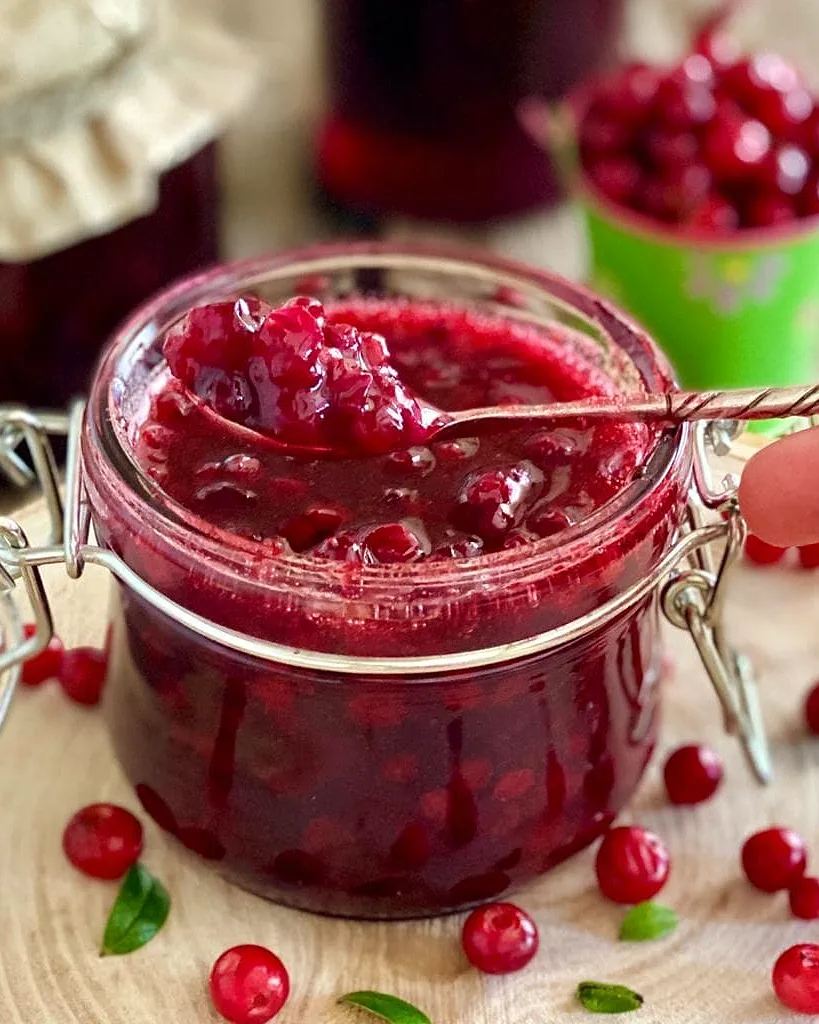
Tart lingonberry jam is proof that the best preserves need nothing more than berries, sugar, and five minutes on the stove.
I know — “homemade jam” makes it sound like a whole project. Sterilizing jars, stirring a bubbling pot for an hour, getting the set just right.
But this Russian lingonberry jam breaks every one of those rules. Three ingredients go into the pot, you bring it to a boil, walk away for a few minutes, and that’s genuinely it.
The jars do the rest of the work while you sleep.
What you get is a jewel-bright jam with a bold, bracing tartness and just enough sugar to smooth out the edges. It’s got that subtle bitter kick that makes lingonberries so addictive — tart like cranberries, but more interesting.
And because the cook time is so short, the color stays vivid and the flavor tastes fresh and alive instead of heavy and syrupy. This is the kind of jam that makes a plain piece of toast feel like a proper breakfast.
What Are Lingonberries?
Lingonberries are small, tart red berries that grow wild across northern Europe, Scandinavia, Canada, and parts of the northern United States. They’re closely related to cranberries but have a more complex flavor — less straightforwardly sour, with a slight bitterness and an almost floral quality underneath.
In Russia and across Scandinavia, lingonberry jam is as ordinary and beloved as strawberry jam is here. It shows up at breakfast, alongside meat and potato dishes, and spooned onto buttered bread at afternoon coffee.
If you can find fresh or frozen lingonberries at a Scandinavian specialty store, IKEA’s grocery section, or your local farmers’ market, grab them. Frozen berries work perfectly well here since they break down quickly during the short cook.
Tips for the Best Tart Lingonberry Jam
The trick to this jam is restraint. It cooks for no more than five minutes, and that is not a suggestion — it’s the whole point.
Lingonberries are naturally high in pectin, so they set up beautifully without any extended boiling. Push past the five-minute mark and you’ll start losing the bright red color and that clean tart flavor that makes this jam special.
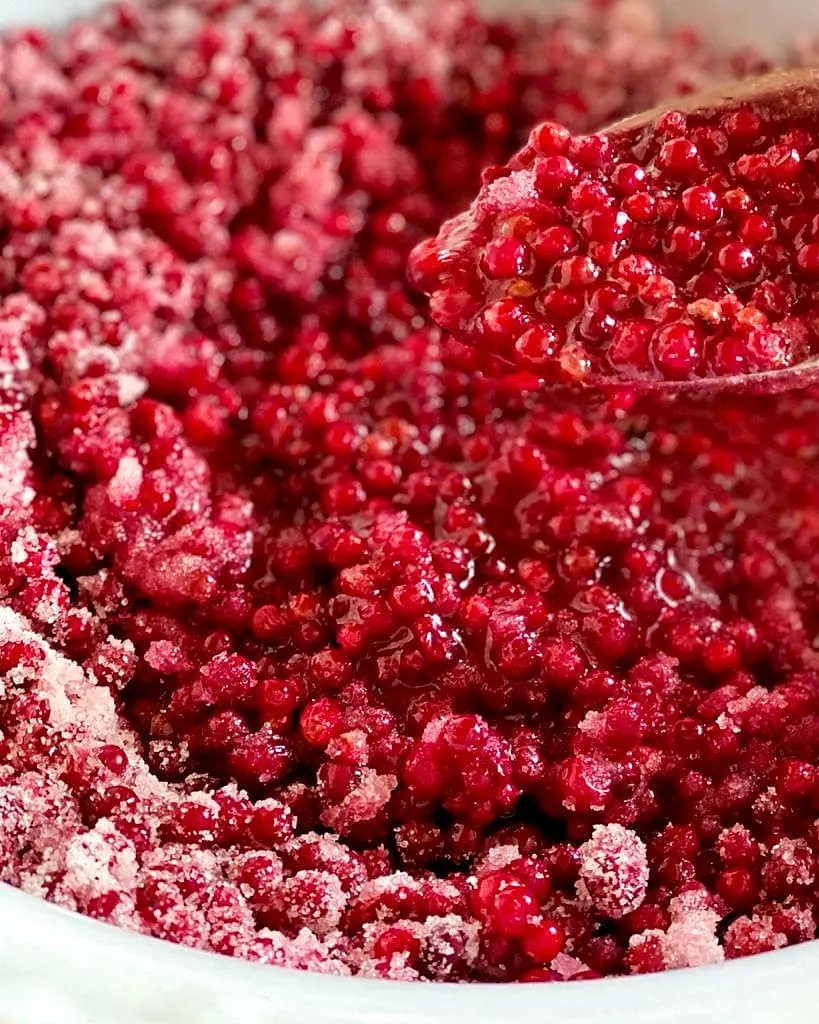
Keep the heat at a steady medium and stir gently so the berries don’t scorch on the bottom. As the mixture heats up, foam will rise to the surface — just skim it off with a spoon as you go.
It doesn’t affect the flavor, but removing it gives the finished jam a cleaner look in the jar.
After you’ve ladled the hot jam into sterilized jars and sealed the lids, here’s the old-school step that makes a real difference: wrap the jars snugly in a blanket or towel and leave them alone for 10 to 12 hours. The slow cooling helps the jam set properly and gives the flavors time to meld.
Don’t skip it. Every time I’ve rushed this step, I’ve regretted it.
What to Serve With Lingonberry Jam
This jam is wildly versatile. For breakfast, spoon it over pancakes, waffles, oatmeal, or thick slices of buttered toast.
It’s also fantastic alongside warm pastries like cinnamon roll focaccia — the tartness cuts through the sweetness beautifully.
But don’t stop at breakfast. In Russia and Scandinavia, lingonberry jam is a classic accompaniment to savory dishes, and it absolutely earns that role.
Serve it alongside a Mississippi pot roast, roasted pork, or game meats. The bright acidity and gentle bitterness act like a built-in condiment — similar to how cranberry sauce works with Thanksgiving turkey.
It’s especially good spooned next to rich, fatty dishes where you need something sharp and clean on the plate.
It also makes a wonderful gift. Jars of bright red lingonberry jam look gorgeous lined up on a shelf, and everyone who tastes it will ask for the recipe.

How to Store Homemade Lingonberry Jam
Once the jars have cooled and sealed, store them in a cool, dark place — a pantry or cupboard works perfectly. Sealed jars will keep for several months at room temperature.
Once you open a jar, move it to the refrigerator and use it within a few weeks.
If a jar doesn’t seal properly (the lid should be concave and not pop when you press it), just treat that jar as the one to use first and keep it in the fridge right away.
More Ways to Use Tart Lingonberry Jam
Once you have a jar open, you’ll find excuses to use it. Mix a spoonful into yogurt or ricotta.
Swirl it into oatmeal. Glaze roasted chicken or pork tenderloin with it in the last few minutes of cooking.
Spread it on a cheese board next to sharp cheddar and crackers. It even works in place of cranberry chutney on a holiday appetizer spread — same family of flavors, slightly different personality.
For anyone who keeps a stocked preserve shelf, this lingonberry jam belongs right next to a classic fig jam and a jar of kumquat jam. Three completely different flavors, but together they cover just about every cheese, toast, and meat pairing you could want.
Homemade Tart Lingonberry Jam Recipe
Description
Ingredients
- 2.2 pounds lingonberries cleaned and peeled
- 5 cups granulated sugar
- 0.5-0.67 cup water
Instructions
- Clean and wash the lingonberries, then drain them in a colander.
- Transfer the berries to a large bowl or pot, pour in the sugar, and add the water.
- Place over medium heat and, stirring gently, bring the mixture to a boil.
- Skim off the foam periodically and cook for no more than 5 minutes.
- Ladle the jam into sterilized jars with lids, then wrap the jars in a blanket and let them rest for 10-12 hours.
Notes
- Do not boil longer than 5 minutes to keep the jam’s bright color and fresh tart flavor.
- Wrap the sealed jars in a blanket so the jam cools slowly and sets properly.
- Store sealed jars in a cool, dark place; once opened, keep in the refrigerator.
Comments & feedback
A clean, soft editorial comment area that matches the rest of the site’s premium green-and-neutral look.